

Innovate UK Grants & R&D Credits: A Practical Guide for SMEs
Grant applications look like exams you haven't revised for. But approached strategically, Innovate UK and R&D relief can be powerful tools.
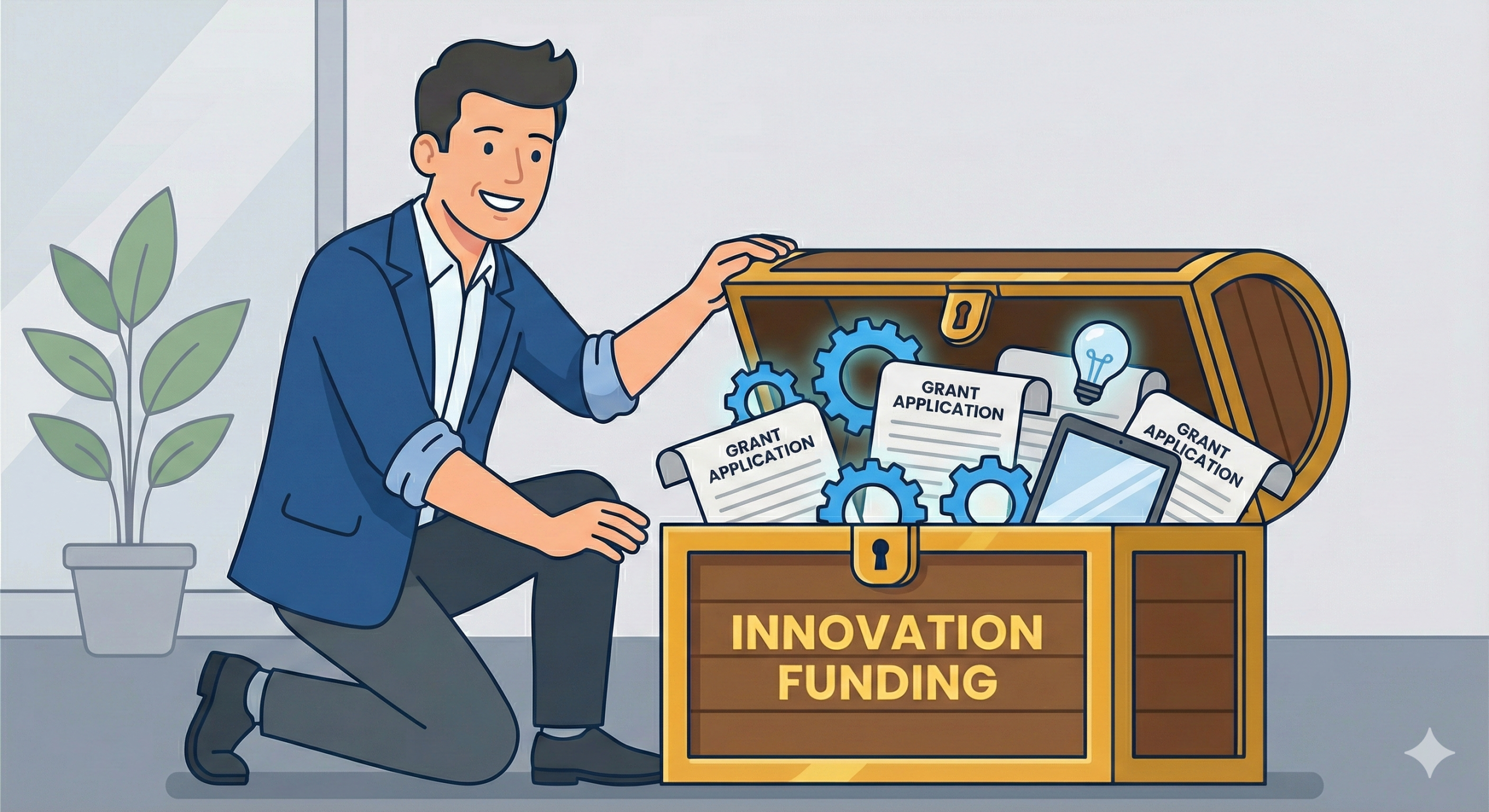
UK SMEs have access to two powerful tools for funding innovation: Innovate UK grants and R&D tax relief. Both can inject significant cash into your business. But they work differently, suit different situations, and come with different strings attached.
Free money? Not quite.
Here's a practical guide to understanding and using them.
The difference between grants and R&D relief
Innovate UK grants are competitive funding awards for specific innovation projects. You apply with a proposal, compete against others, and if successful, receive funding (typically 50–70% of eligible costs) to deliver the project. Grants are forward-looking: you're funded to do something you haven't done yet.
R&D tax relief is a retrospective tax benefit. You claim it after you've already spent money on qualifying R&D activities. HMRC (HM Revenue & Customs) reduces your corporation tax bill (or, for loss-making companies, provides a cash credit). R&D relief is not competitive – if you qualify, you're entitled to it.
Both can be valuable. But they require different mindsets.
Making grants work for you
Innovate UK grants are attractive because they're non-dilutive: you don't give up equity. But they're also demanding.
To succeed, you typically need:
- A strong application. Grant writing is a skill. Reviewers see hundreds of proposals. Yours needs to be clear, compelling, and aligned with the competition's priorities.
- Match funding. Most grants require you to contribute a share of costs. You need cash or committed resources.
- Delivery capability. Innovate UK monitors projects. If you don't deliver, future applications suffer.
- Strategic fit. Grants are most useful when they align with something you'd want to do anyway. Chasing grants for their own sake distorts priorities.
That's the trade-off.
Getting R&D relief right
R&D tax relief is often underused, either because businesses don't realise they qualify or because they're nervous about HMRC scrutiny.
The definition of R&D for tax purposes is broader than many expect. You don't need a lab or a patent. If you're developing new products, processes, or services – or appreciably improving existing ones – and facing technical uncertainty, you may qualify.
Common qualifying activities include:
- Developing bespoke software
- Creating new manufacturing processes
- Designing novel products
- Overcoming technical challenges in delivery
The key is documentation. Keep records of what you're trying to achieve, what uncertainties you faced, and how you resolved them. Good record-keeping makes claims easier and more defensible.
Stacking these tools intelligently
Grants and R&D relief can sometimes be combined – but the rules are complex. You can't claim R&D relief on costs already covered by a grant. However, you can claim on your match-funded contribution.
The smart approach is to think about both tools together when planning projects. Where does grant funding fit? Where does R&D relief apply? What documentation do you need for each?
The bottom line
Neither grants nor R&D relief are "free money". Both require effort, planning, and compliance. But for SMEs genuinely investing in innovation, they can significantly reduce the effective cost of R&D and accelerate growth.
If you'd like help navigating grants and R&D relief for your business, get in touch.

Martin Sandhu
AI Product Consultant
I help founders and established businesses build products that work. 20+ years in product and engineering.
Connect on LinkedIn